When planning a crane system for a new workshop or retrofitting an existing building, one of the first structural decisions you will face is whether to install a top running or an underhung (under running) overhead crane.
Both designs move heavy loads efficiently across a bay, but they interact with your building in completely different ways. Picking the wrong type can either waste precious headroom or require expensive structural modifications to your roof trusses or foundation columns.
Quick Takeaway for Facility Managers:
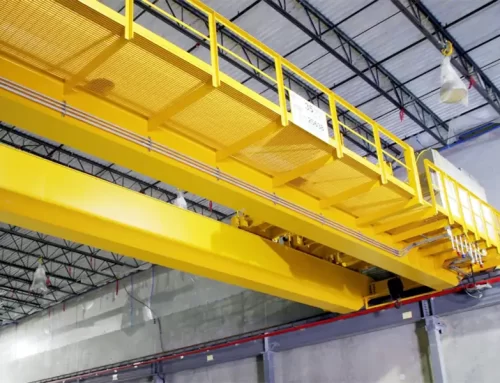
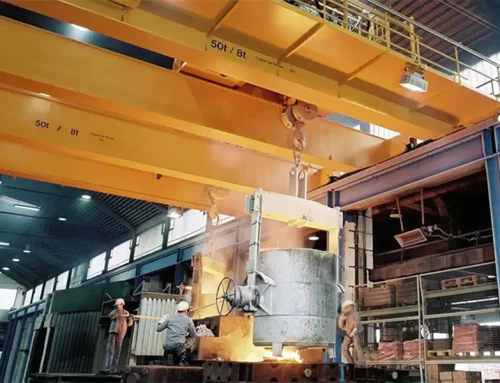
- Top Running: The end trucks ride on top of ASCE rails mounted on runway beams. Best for higher capacities (5 tons to 100+ tons), wider spans, and maximum hook height.
- Underhung (Under Running): The end trucks hang from and ride along the bottom flange of the runway beams, which are typically suspended directly from ceiling roof trusses. Best for lighter capacities (1 to 10 tons), multi-bay interlocking transfers, and buildings where floor space cannot accommodate support columns.

Figure 1: Top running configuration with bridge end trucks resting directly on top of elevated runway rails.
Engineering Comparison: Top Running vs. Underhung
Here is a direct side-by-side comparison of the core mechanical and structural specifications:
| Feature / Parameter | Top Running Crane | Underhung Crane |
|---|---|---|
| Track Mounting | ASCE rails or square bars on top of runway beams | Rides on bottom flange of patented track or I-beam |
| Typical Capacity Range | 1 Ton up to 250+ Tons (Single & Double Girder) | 1 Ton up to 10 Tons (Occasionally up to 15 Tons) |
| Standard Span Range | 6 m to 35+ m (20 ft to 115+ ft) | 3 m to 18 m (10 ft to 60 ft) |
| Usable Hook Height | Maximum (trolley sits on or between girders) | Reduced (entire hoist/trolley hangs below the runway) |
| Building Support Method | Building columns with corbels, or freestanding columns | Ceiling trusses or roof rafters (saves floor space) |
1. Hook Height and Usable Headroom
If you have a ceiling height of 6 meters (20 feet) and you need to lift equipment onto a 2-meter test stand, every centimeter of hook travel matters. In a top running system, the end trucks sit on top of the runway beam. Choose a single girder overhead crane or double girder overhead crane for maximum lift distance.
2. Building Structure and Foundation Requirements
- Top Running Runway Support: Forces transfer into building columns or freestanding supports.
- Underhung Ceiling Loading: Roof trusses must handle concentrated dynamic hanging loads; a structural engineer should verify the design.
3. Side Approach and End Truck Overhang
Underhung bridges can use cantilever overhangs to bring the hook close to side walls, while top running cranes provide robust high-capacity coverage.
4. Cost Considerations
- Underhung systems can be economical where roof trusses are already engineered for crane loads.
- For heavier capacities, dedicated top-running columns are often more economical than roof reinforcement.
- Where neither roof nor floor supports are suitable, consider a gantry crane.
How to Decide for Your Workshop
Choose top running for higher capacity, wider spans, and maximum hook height. Choose underhung for lighter loads, clear floors, close wall approach, and interlocking bay transfers. Request a project review through Get a Quote.
Frequently Asked Questions
Can an underhung crane be double girder?
Yes, double girder underhung cranes exist for selected capacities, but top-running double girder designs are often more economical at higher loads.
What is the maximum span for an underhung crane?
Most single-girder underhung systems span 6 m to 18 m, subject to engineering review.
How do I calculate wheel loads?
Wheel loads depend on rated load, trolley position, crane deadweight, dynamic impact, and runway geometry; a qualified structural engineer should finalize the design.