Why Overhead Cranes Skew on Runway Rails and How to Correct Bridge Crabbing
If you hear a high-pitched metallic screeching as your bridge crane travels down the bay, or if you find fine steel shavings piled along the top flange of your runway beams, your crane is skewing (also known in the field as crabbing).
Skewing happens when one end truck travels slightly faster or sits out of square relative to the opposite end truck. Instead of rolling parallel to the ASCE runway rails, the crane yaws at an angle. The wheel flanges grind against the rail head, wearing hardened steel wheels and increasing motor amp draw.
Immediate symptoms:
- Loud wheel flange squeal and popping during bridge travel.
- Metal dust on runway beams and uneven wheel-flange wear.
- Unequal motor current, overheating, or thermal trips.
- Visible crabbing during acceleration or braking.

Runway rail alignment and end-truck squareness are critical for smooth travel.
The 5 Root Causes of Crane Bridge Skewing
When plant managers call the Nybon field service team, the problem usually traces to a mechanical, structural, or electrical issue.
| Root Cause | Mechanism | Diagnosis |
|---|---|---|
| Runway rail span deviation | Rail distance widens or narrows beyond CMAA 70 / ISO 12488-1 tolerance | Total-station laser survey across rail centerlines |
| Wheel diameter mismatch | One replacement drive wheel travels farther per revolution | Pi-tape tread circumference measurement |
| End-truck diagonal out of square | Bridge and trucks are not parallel | Compare wheel-axle diagonals |
| VFD dual-drive desynchronization | Unequal torque or speed slip | Clamp-meter current and VFD slip settings |
| Unequal brake torque | One brake bites harder on stopping | Inspect air gaps and stopping distance |
Runway Rail Alignment Tolerances
Verify the runway before blaming the crane. ISO 12488-1 and CMAA Specification 70 checks include span deviation, straightness, elevation, and rail-joint gaps. Typical field targets are ±3 mm for spans up to 15 m, ±5 mm for longer spans, straightness within 3 mm per 10 m, elevation within ±5 mm, and rail-joint gaps of 1–3 mm.
Wheel replacement rule: Replace drive wheels in matched pairs. Even a small wheel-diameter mismatch can create cumulative travel error and force the bridge into the rail.
Field Procedure to Correct Crabbing
- Measure opposite drive-wheel diameters and replace wheels in matched pairs.
- Check wheel toe-in/toe-out with a precision straightedge or laser.
- Verify end-truck squareness and shim structural joints if needed.
- Synchronize VFD dual-drive ramping with balanced slip compensation or encoder feedback.
- Set brake-release air gaps identically on both sides.
Running Gear for Heavy Duty Cycles
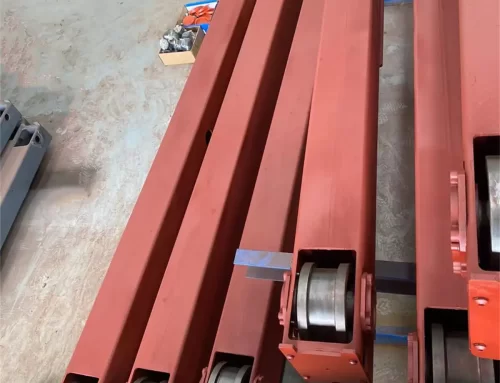
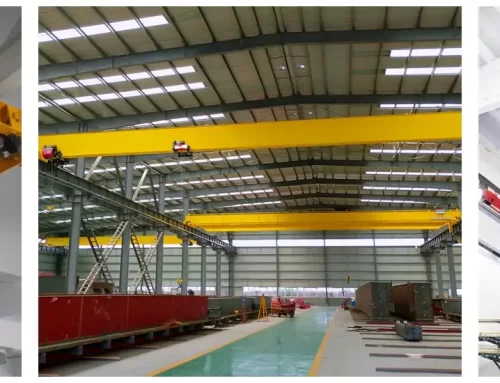
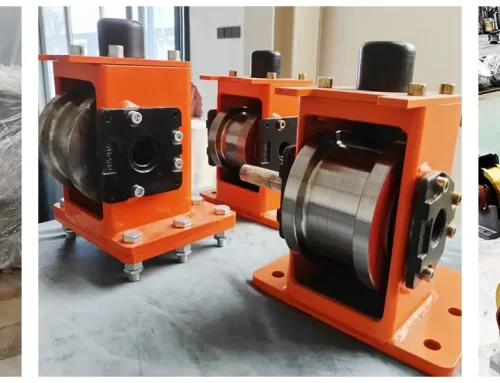
On high-capacity overhead cranes and single girder cranes, Nybon Machinery uses aligned wheel blocks, side guide rollers, and VFD S-curve acceleration to reduce flange grinding. For outdoor applications, consider gantry cranes. Review crane duty cycles and FEM/ISO classes for selecting the right mechanism group.
Need Custom Crane Sizing or Engineering Calculations?
Our application engineering team provides free runway wheel load calculations, FEM/ISO duty class matching, and custom CAD drawings for your facility.
Frequently Asked Questions
How much wheel flange wear is allowable?
Remove wheels when flange thickness or tread wear reaches the limits specified by the applicable crane maintenance standard and manufacturer.
Why does a crane skew in one direction?
Single-direction skewing usually indicates wheel angular misalignment or uneven brake drag.
Can rail alignment be corrected without replacing rails?
Often yes: adjustable rail clips can allow lateral realignment after a laser survey and structural inspection.