When outfitting a modern manufacturing facility, machine shop, or warehouse, choosing between a single girder and a double girder overhead crane is one of the most critical capital investment decisions. Both crane configurations deliver reliable material handling, yet their structural engineering, load capacities, hook heights, and overall costs differ significantly.
Quick Engineering Summary
- Choose Single Girder if your lifting requirements are under 20 tons, span is under 28.5 meters, building headroom is standard, and budget efficiency is a priority.
- Choose Double Girder if you require heavy-duty lifting (5 to 500+ tons), high operating duty cycles (FEM/ISO A5–A8), maximum hook height, or auxiliary hoists and specialized grabs.
1. Structural Design & Working Principle Differences
The core structural distinction lies in how the bridge girder supports the hoist and trolley mechanism:
Single Girder Overhead Crane Design
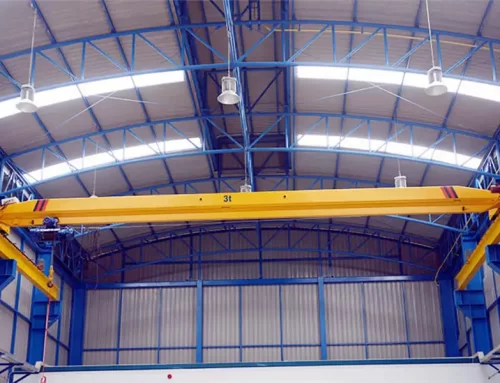
A single girder overhead crane consists of one bridge beam supported by end trucks on each side. The electric hoist trolley runs along the bottom flange of the bridge beam (underhung trolley) or utilizes an ultra-low headroom European-style hoist. Because it uses less steel, it imposes significantly less dead weight on your building’s runway columns and building foundations.
Double Girder Overhead Crane Design
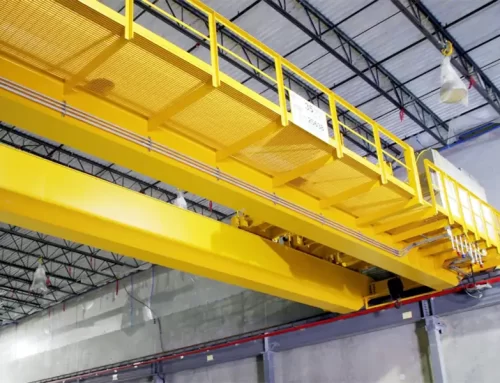
A double girder overhead crane features two parallel bridge beams. The hoist and trolley unit travels on rails mounted along the top surface of both girders (top-running trolley). This allows the hoist hook to travel up between the two beams, capturing significantly more usable hook lifting height.
2. Technical Comparison Matrix: Single vs. Double Girder
| Engineering Parameter | Single Girder Crane | Double Girder Crane |
|---|---|---|
| Standard Load Capacity | 1 Ton – 20 Tons (customizable to 32T) | 5 Tons – 500+ Tons |
| Span Range | 7.5 m – 28.5 m | 10.5 m – 35+ m |
| Usable Hook Height | Moderate (limited by underhung hoist) | Maximum (hook travels between girders) |
| Duty Classification | ISO A3–A5 / FEM 1Am–2m | ISO A5–A8 / FEM 2m–5m (Heavy/Continuous) |
| Building Load / Deadweight | Low – saves runway & column steel | High – requires heavier structural support |
| Cost & Investment | Cost-effective (lower initial & installation cost) | Higher initial investment (optimized for high tonnage) |
3. Key Selection Factors for Workshop Planners
Factor A: Required Capacity & Duty Cycle
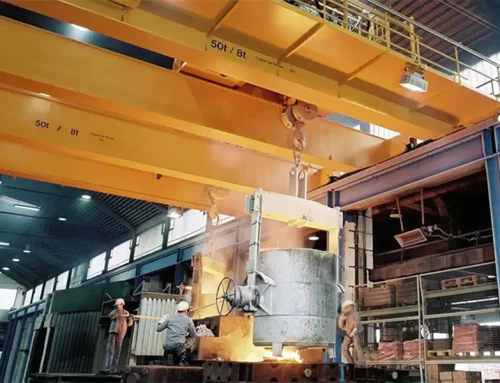
If your daily operations involve light-to-medium handling (such as general equipment assembly, parts storage, or maintenance workstations), an LD standard or HD European-type single girder crane paired with a wire rope hoist is the most economical solution. However, for steel mills, foundries, precast yards, and container handling with continuous daily duty (FEM M6-M8), a double girder crane is mandatory to ensure fatigue resistance and long service life.
Factor B: Overhead Clearance & Hook Travel
If your building has limited vertical clearance from the runway beam to the roof truss, a double girder crane enables the hoist hook to rise higher than the crane rail line. Alternatively, for low headroom workshops with lighter loads, an HD European single girder crane with an ultra-compact hoist provides optimal clearance without requiring double beams.
Factor C: Maintenance Walkways & Auxiliary Equipment
Double girder bridge cranes accommodate full-length service platforms, handrails, and maintenance walkways across the bridge. This makes regular inspection of motors, festoon systems, and electrical panels significantly safer and easier for your maintenance technicians.
Need an Engineering Assessment for Your Workshop?
Nybon Machinery provides free CAD runway layout drawings, wheel load calculation, and custom lifting solutions tailored to your building specifications.
4. Frequently Asked Questions (FAQ)
Q1: Can a single girder crane be upgraded to a double girder later?
Upgrading from single to double girder requires verifying whether your existing runway beams, building columns, and footings can support the increased wheel loads and wider top-running trolley gauge. In many cases, replacing the bridge and end trucks or installing standalone runway columns is necessary.
Q2: What is the price difference between single and double girder cranes?
For a 10-ton capacity crane with a 20-meter span, a standard single girder system is generally 25% to 40% more affordable in equipment cost, while also delivering up to 30% savings on runway beam steel requirements.
Q3: How do I choose between single and double girder for outdoor yards?
For outdoor material yards without building columns, consider exploring gantry crane solutions, available in single and double girder configurations with full weatherproof protection.